Styles6 min read
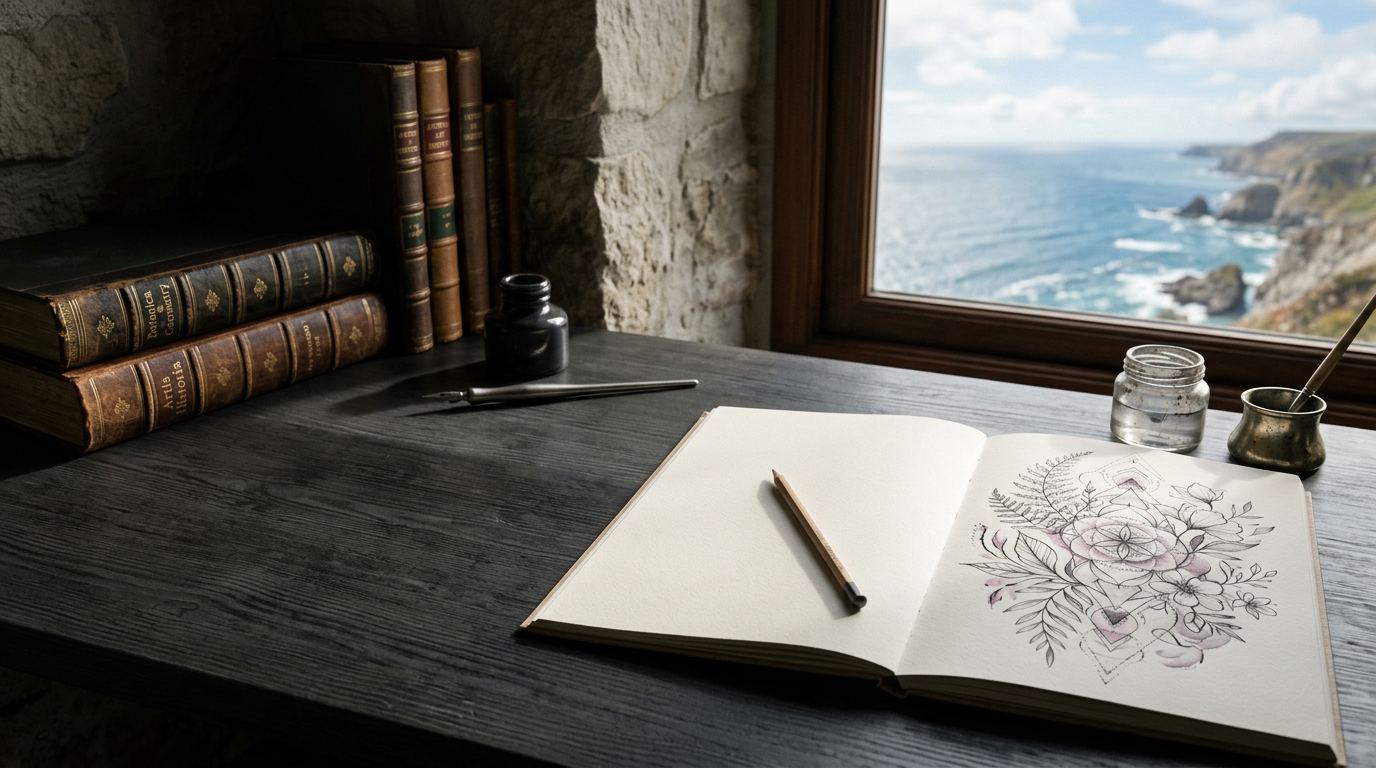
Sacred geometry and ornamental work look mathematical on paper, which is exactly why they are difficult on skin. Bodies are curved, asymmetrical and constantly in motion; a pattern that is perfect flat can distort badly once it wraps a limb.
The solution is to design on the body rather than for it. Measuring, marking and stencilling are done with the client standing and moving, so the centre of a mandala sits where the eye expects it and repeating elements stay even as the surface curves away.
Spacing decides whether these pieces age well. Dot work and fine repeating structures need breathing room; packed too tightly, the negative space closes up over the years and the pattern loses its structure. Slightly larger scale almost always produces a cleaner tattoo a decade later.
Large ornamental projects — sleeves, sternum pieces, back panels — are planned as a whole before the first session. Each sitting then completes a defined stage of a finished drawing rather than improvising outward, which keeps the symmetry intact and avoids the patchwork look that comes from growing a piece session by session.
If you are considering ornamental or sacred geometry work, bring whatever references speak to you. The design conversation is where the structure is set, and it is worth the time.